

Package 1
3 consultations · 3 months
$170
Save $40
Take charge of your health with personalized, human, evidence-based nutrition support — online, in the community and, where services are available, in person.
Health talks, measurements and personal advice: a Kuishi Smart community health event, in 43 seconds.

We believe nutrition is an essential pillar of preventing and managing chronic disease. Our dietitians help you live better with diabetes, hypertension, obesity and chronic kidney disease, while respecting your eating habits, your goals and your reality.
Eat healthy.Live better.Thrive.
Care that brings together scientific rigour, listening and cultural adaptation.
Chronic conditions
Our services
Consultations, telehealth, mobile clinics, screening, community support and prevention: Kuishi Smart is there at every step, with qualified dietitians and health professionals.
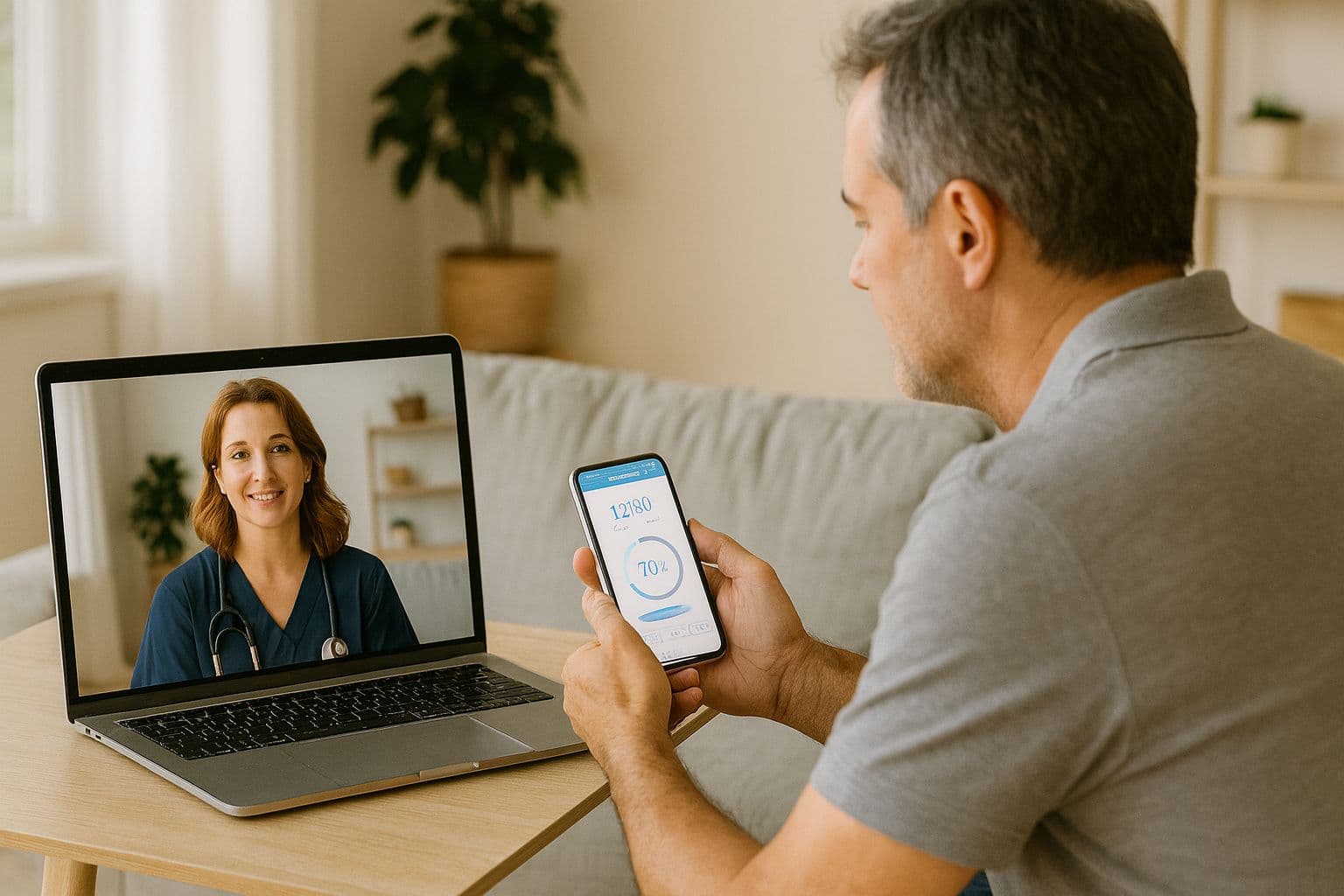 TelehealthOur dietitians' expertise, right on your screen.Learn more : Telehealth
 Mobile health clinicsDepending on programs and regionScreening and advice, close to communities.Learn more : Mobile health clinics
Services are offered depending on jurisdiction, team availability and current programs. Write to us to find out what is available near you.
Person-centred care · a caring team · realistic strategies · an interprofessional approach · a commitment to health equity.
Discover our approachFour stages that follow one another, so no one is left alone between appointments.
Through community education, outreach and digital tools, we promote balanced nutrition, physical activity and mental well-being.
Using mobile clinics and digital tools, we screen for diabetes, hypertension and obesity, with timely referral.
Tailored care plans led by qualified dietitians, in person or through telehealth.
Digital health records, follow-up visits and remote check-ins ensure continuity of care.
Testimonials
People living with diabetes or overweight, a physician and our founder speak in a MELYA CHANNEL report; a nutritionist describes his training. Each clip lasts a few minutes and is also available in writing.
1 / 7
These testimonials describe personal experiences, filmed in 2021 and 2023. Results vary from one person to another. Nutrition complements medical care: never change or stop a treatment without your doctor's advice.
To read rather than watch: a summary and transcript of each clip.
 Mme GodebertLiving with diabetesI regained confidence and changed the way I eat
Discouraged by alarming talk about diabetes, Mrs. Godebert found a warm welcome at Kuishi Smart and the reassurance that people can live a long life with the condition. Regular mealtimes, no more sugar and exercise: she says she lost weight, got back to normal levels and returned to work. Her advice: “first, you have to love yourself.”
At first, I wondered what he could really give me. I eat everything at home: what is he going to give me? But I told myself: since I'm suffering, I'll go and see what they have. I came, and first of all he welcomed me well. The welcome was very warm. He tried to listen to me, more than doctors do.
Sometimes people tell you: diabetes is a bad disease, you could die. One even told me: if you're not careful, in five or six years you could have kidney problems. I thought: why give me medication if they know I'm going to die? I was a little nervous. I changed doctors, I saw another one; I was looking for the one who would talk to me properly. Only here did I find that. He welcomed me and told me I could live a long time.
In my old life, I loved eating fries. That's really what caused me a lot of problems. I had no set times for meals: I could eat in the morning, then again in the evening, at any time. That disorder also contributes to health problems. When he told me to eat properly in the morning, at noon and in the evening, I tried to stick to it, because I felt unwell. Everything he told me, I did.
I started losing weight. I was too heavy, I had a big belly: I weighed 86 kilos, and today I weigh 74. My blood sugar was also far too high, around 280, 200 at the start. My HbA1c, my glycated haemoglobin, was 10.8. That's already a lot: the normal level is 4 to 7, and I had 10.8. With the diet Kuishi Smart gave me, it really became perfect. It went down day by day, and my weight went down thanks to exercise and the diet.
My stress went down too, because at the start he told me: don't be stressed; there are other people who have diabetes and live a long time. I told myself that Kuishi Smart knows many people who have had this disease and live a long time, so I could live a long time too. And I even found the courage to go back to work.
I'm at 5.1, so now I no longer have diabetes. But of course I must keep to my diet. I no longer take medication: I was told that if I kept taking it, I could have hypoglycaemia, because I'm already in the normal range. I was told to stop the medication and keep to the diet that helped me: giving up sugar. I gave up sugar completely.
At first, I had problems with high blood sugar, back in 2007. I had had a baby, and what is called gestational diabetes. I didn't know what to do. I was told it wasn't much, but I was also given medication for about two months. I took Glucophage and it really went down; I was also swimming. I was told to stop the medication. Medication is sometimes good, but I preferred to follow the diet and stop taking sugar.
Kuishi Smart followed me for four months, and I kept coming: it's maybe five months now. And then I felt well. Thank you, Kuishi Smart. That's why I'm here: if they hadn't helped me, I wouldn't have come to give a testimony. I'm sharing what happened to me in the hope that it might help others believe they can live as I do.
Now I'm well, I've lost weight, I work as I did before. I've only changed my lifestyle: I work, but I also exercise. Before, I had no time for exercise: I ate and didn't exercise. Now I'm very well.
The advice I would give is that you first have to love yourself. If you don't love yourself, you risk doing what I used to do: eating, not exercising, gaining weight any old way. I had a big belly, I was desperate; when I got dressed I didn't feel good, I was embarrassed. It helped me a lot, because now I eat moderate amounts, and it works well.
The big piece of advice is to follow the advice and to see the doctor often. I come here once a month. People think it's expensive to come for a consultation at Kuishi Smart, since they can go and buy vegetables themselves. But the time we spent together, the advice — I remember it every time I prepare my meals, and it helps me a lot.
Clip from MELYA CHANNEL (January 2021), 4:21 to 11:39. Translated from the video, with hesitations and repetitions removed.
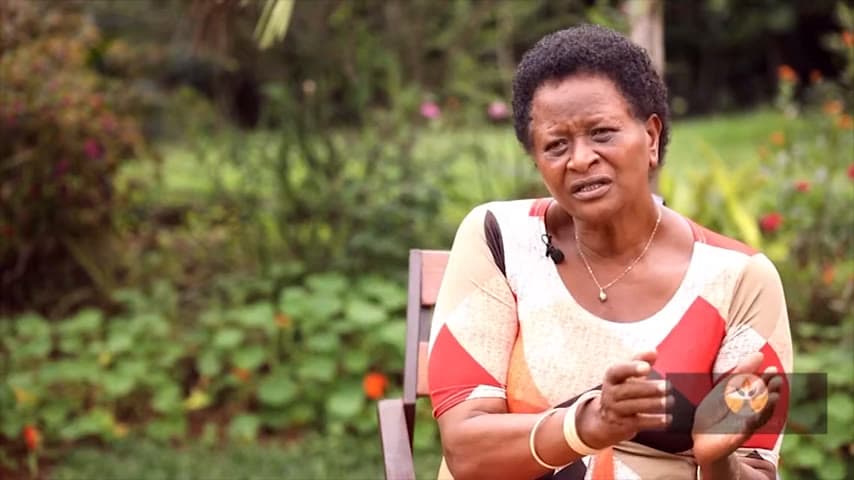 Mme ValérieLiving with diabetesEating again, but differently
Weak and worried about her blood sugar, Mrs. Valérie was eating very little. She learned to eat a bit of everything in small amounts: a plate that is half vegetables, meals four to six hours apart, and an hour's walk every morning. She says she has regained her strength and lowered her blood sugar.
I had a problem with sugar: it kept going up, and that's why I was always unwell. I told myself that if there was someone who could help me, I could come and see the doctor; that's why I came here. It was weakness: I was weak, I felt very unwell. I took measurements every morning and saw that my sugar was rising. I thought that was why I didn't feel well, and that I had to go and see the doctor.
I told him everything, and I showed him the sugar measurements I was always taking. He told me that was why I wasn't well. I was taking medication, but it did nothing. Then he gave me advice, I followed it, and that's why I feel well.
First he asked me: what do you eat? I showed him my food, and he told me it wasn't enough. Because I was weak, I was eating very, very little; even the quality wasn't enough. He told me: you can't go on like this, you must eat everything. I told him: if I eat everything, I'll die. He told me: no, that's not the answer; you must eat everything, I'll show you how.
He showed me a plate, to know how much to take. It's a plate divided into three parts. The biggest part is for vegetables: half must be vegetables. And a quarter you take for starchy foods. You have to eat like that every day. And also keep to set times: that's what will help bring your sugar down.
He showed me what I should have in the morning: two or three pieces of bread with an egg, with fruit. Then you count four hours before eating something else, but no more than six hours, otherwise your sugar will go up: the body will produce a lot of sugar, and the pancreas, with insulin, will be too weak to fight that sugar. You must keep to four to six hours. Really, that's what I did.
I forgot to tell you: in terms of quality, it's [all the local food], you must eat everything, but in measured amounts. It's the quantity that counts. Not a lot, not enough to fill your belly, but keeping to those times. And eat a bit of everything, without mixing just anything: if you have sweet potato, it's sweet potato with a piece of meat, for example, with a big portion of vegetables. That's how he advised me. And in the evening, since you had sweet potato at noon, you have potato, with a piece of fish, for example, and lots of vegetables. I followed everything, with the times I told you about, between four and six hours.
I've been with him for almost six months, I think, and it has really helped me. I came here with a sugar level of 476, it was around 400 like that, and the medication didn't stop my sugar from rising. Now, on the sheet where I write down my measurements, I'm at around 140, 150; sometimes, when I've kept to the times well, even 120.
I always add exercise to my diet. For example, in the morning I always get up at five and walk for an hour [around my neighbourhood] before going to work. Even if I have things to do, I have to walk for an hour in the morning; I start at half past five or six. I feel well, there's no problem. Yes, I'm satisfied.
The advice I can give everyone is that even if you take medication, it isn't enough. The body also needs to be supported by food to fight the disease: if you're weak, you can't do anything. You have to eat and follow the advice, as the doctor always says: eat three times a day, keep to set times, eat small amounts, but three times a day. And eat everything, don't say I'll eat this and leave that. Our body also needs to be strong.
Difficulties? Since I needed something that could help me, I followed everything; it wasn't hard. It would be hard for someone who says: I only had a small amount. But not me: if that's the amount it should be, that's how it is, and it was enough for me. I wanted to get somewhere, as the doctor told me: I had been told I would get there if I followed all this advice. No difficulty at all.
Clip from MELYA CHANNEL (January 2021), 11:39 to 19:51. Translated from the video, with hesitations and repetitions removed.
 Mme ClaireLiving with diabetesDiabetes is not the end of the world
After her diagnosis, Mrs. Claire had given everything up, convinced her life would soon be over. “Diabetes is not the end of the world, it's a question of discipline,” she was told. Three meals a day, suitable foods and 30 minutes of exercise daily: she says she has lost weight and regained her strength, while continuing her medical follow-up.
I came here for a consultation. I had a diabetes problem: I had already seen a doctor, who told me I had diabetes, and then a friend told me there was someone who could help me. That's how I came here. My blood sugar was at 600. He did everything to bring the sugar down, and I did my best with the diet to lower it and stick to the diet. I had been given medication, of course.
My problem was the diet, because it was the first time I had diabetes. It was as if the world was falling on me. I was afraid of losing my life. That's why I said: my God, who can help me, so that my diabetes can go down or be cured? I had a terrible headache, nausea, dizziness. I was also tired, had no appetite, had a problem with my eyes; I often needed the toilet, I was thirsty.
The first time, he told me I must keep hope. I had already lost hope. When I came here, my doctor told me: first, you must feel that you are in good health. Diabetes is not the end of the world, it's a question of discipline. You must discipline yourself with food and with exercise; all of that will help you live a long time. That's how he really helped me, and that advice still guides me today. I had already left my job, because I thought my life would soon be over. I had already given everything up. But he really helped me; he told me: you will live a long time, calm down.
About food, he advised me not to eat any old way: I must eat three times a day, in the morning, at noon and in the evening; if I'm hungry between morning and noon, I can have a piece of fruit. I understood that I had to start eating with discipline, and that's how I started. I can see it gives good results. He told me to change my food: I can have bananas, lots of vegetables, some beans, sauce for example, with fruit.
He asked me if anyone in my family had diabetes; I told him I didn't know. He asked me if I had any other health problem; I told him I had hypertension. He asked me for all the details of my life. He told me I had a lot of extra weight, a lot of fat, and that this can also cause diabetes.
I really feel well. Kuishi Smart really helped me with food, because at the hospital they hadn't really told me how to manage my eating. Since I started coming here, I've started losing weight: I came in at 95 kilos, and today I'm at 85, in three months. I've been here three times. You see, I've already had a very good result. That's why I tell people every day that I'm well: I'm not as big as I used to be.
Today my blood sugar is between 90 and 120, it doesn't go higher. The dizziness is gone, my eyes are very good. But I have to see my doctor every month. Yes, I'm still taking medication, but my doctor told me that next year I'll be able to stop it, because he can see my health is very good.
Diabetes is a very serious disease, a disease that can't be cured. Kuishi Smart doesn't give you medication, but advice and follow-up. For hypertension, he told me I must take my medication, and he also gave me advice and a diet for hypertension. No, it doesn't go up; it goes up when I'm stressed, or when something unexpected happens. Today, I'm between 80 and 120.
A message of comfort to people with problems like mine: life goes on with diabetes. It's a question of discipline. If you follow your diet well, the one the doctor gave you, or someone else like Kuishi Smart, life will really go on very well. You will see your children, you will have hope of living like everyone else. Really, what counts with diabetes is discipline with food: eating food that suits diabetes. And exercise, really exercise.
I exercise every day: sit-ups, and sometimes walking every evening. You take a few minutes, 30 minutes a day, that's enough, you can't get tired. And I'm as strong as before diabetes. I'm really very happy to be with Kuishi Smart, I really thank the doctor. I'll keep to my diet: even if you stop the medication, you must keep to the diet, because diabetes isn't cured. I have hope.
Clip from MELYA CHANNEL (January 2021), 19:53 to 30:33. Translated from the video, with hesitations and repetitions removed.
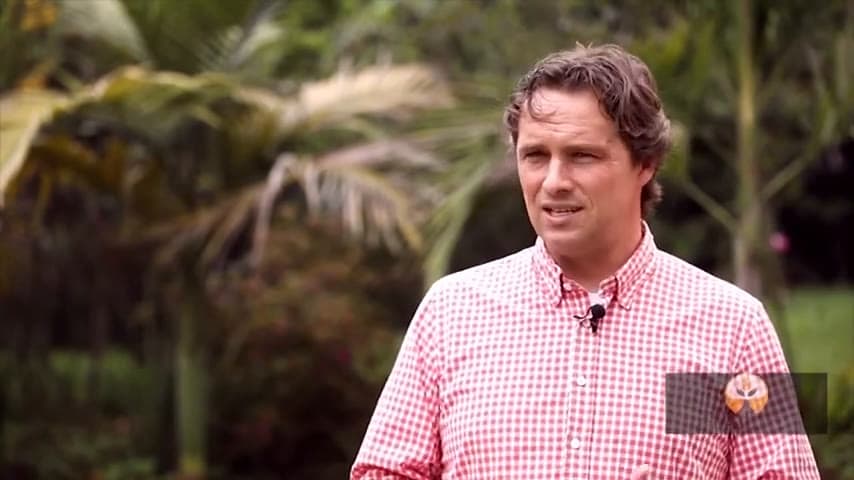 M. PeterLiving with overweightA proposal, not an imposition
Mr. Peter exercised but could not lose weight. Kuishi Smart first assessed his habits and his work, then suggested gradual, stress-free changes. He started losing weight within weeks and keeps working towards a healthy weight: for him, the change comes from himself, with Kuishi Smart guiding the way.
I came to Kuishi Smart through the ties between my children and Dr. Patient's children. A year ago, in 2019, I decided I needed to work on losing weight. I weighed between 94 and 95 kg, and I consulted Kuishi Smart. Despite the sport I was doing, I couldn't lose weight. The excess weight had a negative impact on my physical and athletic well-being, but also on my mental well-being: when you are in good physical shape, you are calmer psychologically.
When I came to Kuishi Smart, they first assessed my eating and exercise habits, and then my work. They looked for what could help me lose weight without stressing me or throwing me off balance. Once I started following Kuishi Smart's care, it took only a month to six weeks to start losing weight.
Today I weigh 86 kg. This weight loss came after Kuishi Smart's follow-up: over a period of one year, I have already lost 8 kg. I still have 6 kg to lose. The goal is to reach 80 kg, the healthy weight for my height and age.
I am satisfied with the cooperation with Kuishi Smart, because its advice and care worked. It was more practical and more complete, in line with my everyday realities. I realised it was not an imposition but a proposal: to lose 15 kg over a reasonable period. What Kuishi Smart brought is that I change my eating habits, and that was bound to take time. For me, I got where I needed to be, and I am happy with this progress. That is why I will continue with Kuishi Smart's help and support.
Could I move forward without Kuishi Smart? My answer is no, because it is a process. The end goal is me, because I have to change my habits, and Kuishi Smart guides me so that I get there.
Clip from MELYA CHANNEL (January 2021), 30:46 to 33:17. Translated from the video, with hesitations and repetitions removed.
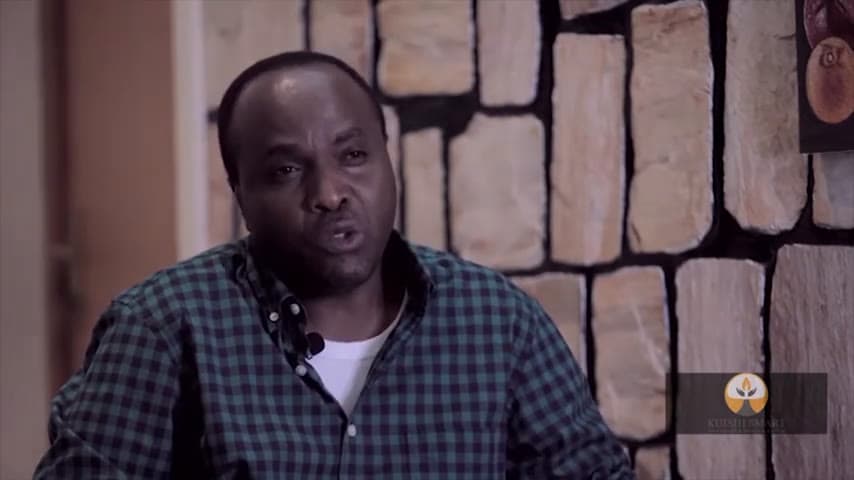 Dr Jean-Paul MizeroPhysician, Kuishi SmartMedication and nutrition go hand in hand
For Dr. Jean-Paul Mizero, medication, nutrition and the patient's own will go together. He describes a multidisciplinary team (physicians, dietitians, nurses, pharmacists and the patients themselves), food adapted to each person's culture, and self-management education to reduce complications. He calls for nutrition to be built into chronic disease care.
Good medical care must go hand in hand with good nutrition: that is what brings good results. There is a complementarity between good nutrition and medication, but also the patient's will. If the patient has the will to get better and follows the medical instructions and those of the dietitians, we always get good results.
That is why patients should be brought into the Kuishi Smart programme. Kuishi Smart works with health care providers and brings in its dietetic programme, centred on the patient, but also on their environment and culture. Patients have very different cultures: treating a European is not the same as treating an African.
When a patient comes from another health facility with their results, we must check when they date from. If they are very recent, we look at the laboratory: we know the standard of the different laboratories here. From there, we can start care. Often we don't redo the test or the diagnosis, but if the results are old, we can redo them. We also take into account previous medical care, if the patient was diagnosed in a health centre: we ask what the doctor gave them, what treatment they are on. We look at the treatment and the patient's condition; if necessary we redo the tests, and then we bring them into the nutrition programme.
We sometimes assess the patient as a team, because it is a truly multidisciplinary team made up of many people: physicians, dietitians, nutritionists, nurses, pharmacists, and patients, who are part of our team. Once we have identified and followed a patient, there comes a time when we discuss their case and share their results, for example the tests done in our laboratory.
In this programme, we encourage self-management: we educate patients so they learn how to eat, and if they can take care of themselves, that's good. It reduces complications. Diabetes has many complications: hypertension, vascular complications, kidney complications… And when patients are well educated, it also lowers the cost of health care. Well-educated patients can change their diet and adapt it to themselves, and that reduces serious hospital cases.
My call to my colleagues is first to put the patient at the centre of everything. You should not stay alone with the patient or monopolise them: you have to place them in a multidisciplinary context. Medical care and nutritional care must truly go together.
I also call on governments, all governments, to promote care by multidisciplinary teams, and to promote nutrition and dietetics: it is a sector that has been badly neglected in many African countries, where people don't even understand why nutrition matters. It must be integrated into patient care, especially for people with chronic diseases such as diabetes, hypertension and obesity, but also other diseases, because each disease has its own way of eating.
Clip from MELYA CHANNEL (January 2021), 33:22 to 40:03. Translated from the video, with hesitations and repetitions removed.
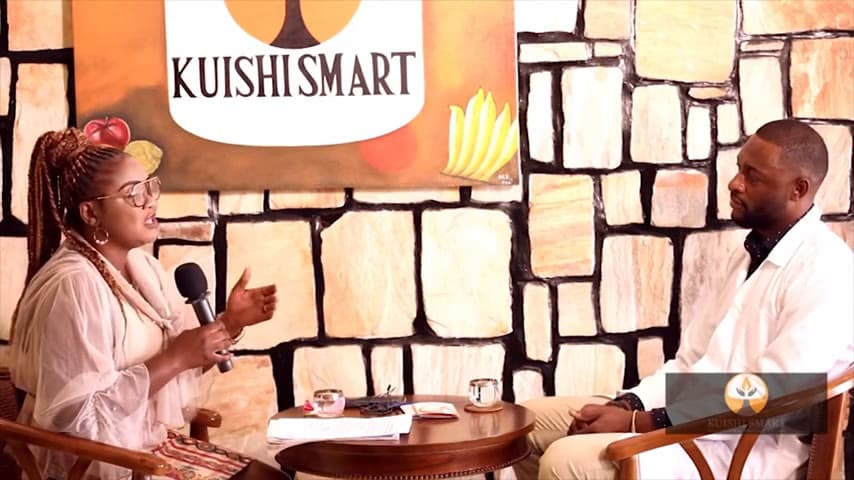 Bakadi Patient BeyaDietitian, founder of Kuishi SmartThe patient is at the centre of everything
Kuishi Smart's founder explains the approach: seeing the patient as a whole person and helping them become “the driver of their own health” through three pillars (education, tools, self-management), without judgment. To build motivation, he starts from what matters to each person, such as their family.
For us, the patient is at the centre of everything, and that really is the key to the success of Kuishi Smart's care. What does that mean? We see patients as whole people: we assess their needs, we look at what they are already doing very well, even before Kuishi Smart, and then we identify opportunities to work on with them, so that they become the drivers of their own health. And that really makes a big difference.
Sometimes patients come with all their worries. When they come to Kuishi Smart, we recognise that they already have concerns, already have stress. We are not there to add to it, but to see how we can support them and make things simpler, so that they realise: I'm not alone on this journey, Kuishi Smart is here to support me.
One of the things we often do is keep raising patients' awareness: why we provide this care, what challenges they may face, how to anticipate them. Kuishi Smart brings three simple pillars: first, patient education; second, the necessary tools; third, building self-management skills. Without that ability to self-manage, patients will always fall back. But once we have built their capacity, they can fall and get back up, because they have the tools, the skills and Kuishi Smart's support.
For us, it's a great pleasure to see patients feeling better and happy: it's like a response to their needs. But we can't take the credit, because in the end it's the patients who do all this hard work. We are just there to support them.
We are proactive about the challenges patients may face. Sometimes the patient already feels guilty: I can't reach my health goals, it's my fault, because I'm lazy, or because I don't have the means. So we identify alternative solutions to show them: you've already come a long way, and this is just a challenge we will work on together to overcome, so that you keep going. Care is not linear: there aren't always ready-made answers and solutions. We learn with patients as challenges come up, and we work with them to support them.
Our approach is patient-centred, because we don't want our patients to feel ashamed or stressed to the point of thinking: I won't go and see the health team, because they'll judge me and ask why I didn't do this. We don't have that tendency: we create a space of safety, trust and learning, together with patients.
Care also covers the cognitive side: we call it cognitive-behavioural care. We also try to work on mental and psychological health, because the patient may think: I can't do it, it's hard. That calls for behaviour change approaches and reinforcing positive behaviour. Because if we say no, the patient will think: I've failed. These are feelings all patients experience. So we tell them: we're here to support you, it's a journey. Even a small child takes a long time to learn to ride a bike: they fall, they get back up. It's the same approach we bring to our patients: it's a journey, a learning process.
The journalist asks: following a patient is good. But when they leave and don't follow the path you give them, how do you help them find that will?
We organise our care like a house: there are several rooms that we identify. To encourage patients, we come back to the question of behaviour: behind every behaviour there is a reason. Why doesn't the patient follow what was proposed or recommended? We look for the motivation. We work with the patient to identify their value: why should I take care of my diabetes or my blood pressure?
The patient may say, for example: you know, I'm only 35, I have young children, I have a family; I must stay healthy to provide for their basic needs. We use that as a value, because it shows that without good health, which my diabetes affects, if I don't take care of it, I won't be able to stay alive and healthy to take care of my family. So we work with the patient to identify the real value that will motivate them to change their behaviour and stick with their care. At the same time, we identify the other challenges that could get in the way of that value, and we keep working, because behind every behaviour there is a reason. We use that value as a foundation to build on and move forward with the patient. That is mostly where we work.
Clip from MELYA CHANNEL (January 2021), 40:34 to 46:50. Translated from the video, with hesitations and repetitions removed.
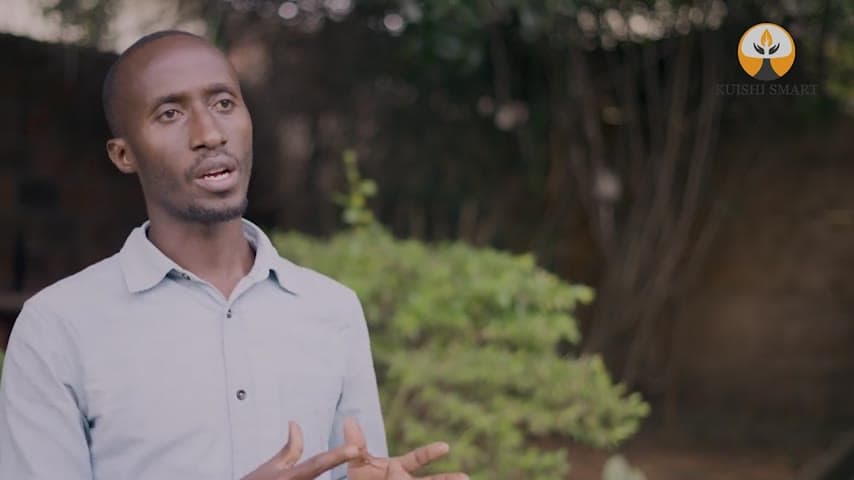 Joseph KaremeraClinical nutritionist, programme alumnusPutting the patient at the centre of care
Joseph Karemera took the dietitian-led training programme on non-communicable diseases. He learned to manage diabetes, hypertension and obesity, to master the nutrition care process and, above all, to set goals with his patients. He encourages his colleagues to take the programme.
My name is Joseph Karemera, I am a clinical nutritionist. From the programme led by a dietitian tackling NCDs, I learnt a lot of things that really increased my skills. I learned how to manage NCD clusters like diabetes, hypertension and obesity. The programme was also really focused on how you can take the patient through the health care system journey: it really showed us that you cannot work alone on the patient's health.
I also learned about the confidentiality of patient information and data, which was really key in the programme, how to document your patients' information, which labs you need to provide your care, and how you can monitor and evaluate your care using the labs.
One more thing that really touched my career is the nutrition care process, because it's the heart of the care. I learnt a lot that helped me know the nutrition diagnosis, how to interpret the labs, how to inform patients about their labs, how to set goals with them, and how to put the patient at the centre of care. Compared with before, when I was still in school, that's really something that was missing.
I couldn't set goals with the patient, but when I finished the programme, I could. And patients could see it: they really loved how I put them at the centre of care, how I showed them where we are today and where we are going, and how I explained their labs and the diagnosis I found. Most of the time I used to confuse nutritional diagnosis and medical diagnosis; the programme really showed me the difference.
My message to my colleagues in the same career is that this programme can really shape the care they give their patients. NCDs are escalating and few people know how to manage these conditions, where nutrition is a pillar: it is the first-line treatment, and medication comes later on. With this programme you learn how to help your patients meet their goals and expectations, because they are frustrated: they need to know what they need. You also need to be in good shape and well equipped to meet your patients' needs. This programme brings the skills we didn't cover in our schools and universities. That is my call to them: they will benefit from this programme.
Video from the Kuishi Smart YouTube channel (July 2023). Transcript based on the video, with hesitations and repetitions removed.
Your health is your best investment. Choose the support that fits your needs.
3 consultations · 3 months
$170
Save $40
4 consultations · 4 to 5 months
$250
Save $20
6 consultations · 6 to 8 months
$300
Save $90
Articles to better understand your health, written by our dietitians.
Understanding diabetes: blood sugar, HbA1c and foodComing soon
Hypertension: why is it called the silent killer?Coming soon
Obesity: beyond weight, an approach free of stigmaComing soon
Chronic kidney disease: protein, salt, potassium and phosphorusComing soon
The role of the dietitian in managing NCDsComing soon
Social determinants of health and access to good foodComing soon
How to recognize a quality nutrition programComing soon
Get our evidence-based advice and news about our programs.